The Everest Base Camp (EBC) Trek is one of the most iconic trekking experiences in the world, offering adventurers breathtaking Himalayan landscapes, Sherpa culture, and a close view of the highest peak on Earth, Mount Everest (8,848 meters). Starting from Kathmandu, the trek gradually ascends through picturesque villages, rhododendron forests, suspension bridges, and rugged mountain terrain, allowing trekkers to experience the natural beauty and cultural richness of the Khumbu region. Along the route, trekkers encounter famous destinations such as Namche Bazaar, Tengboche Monastery, Dingboche, Lobuche, and the ultimate goal, Everest Base Camp itself.
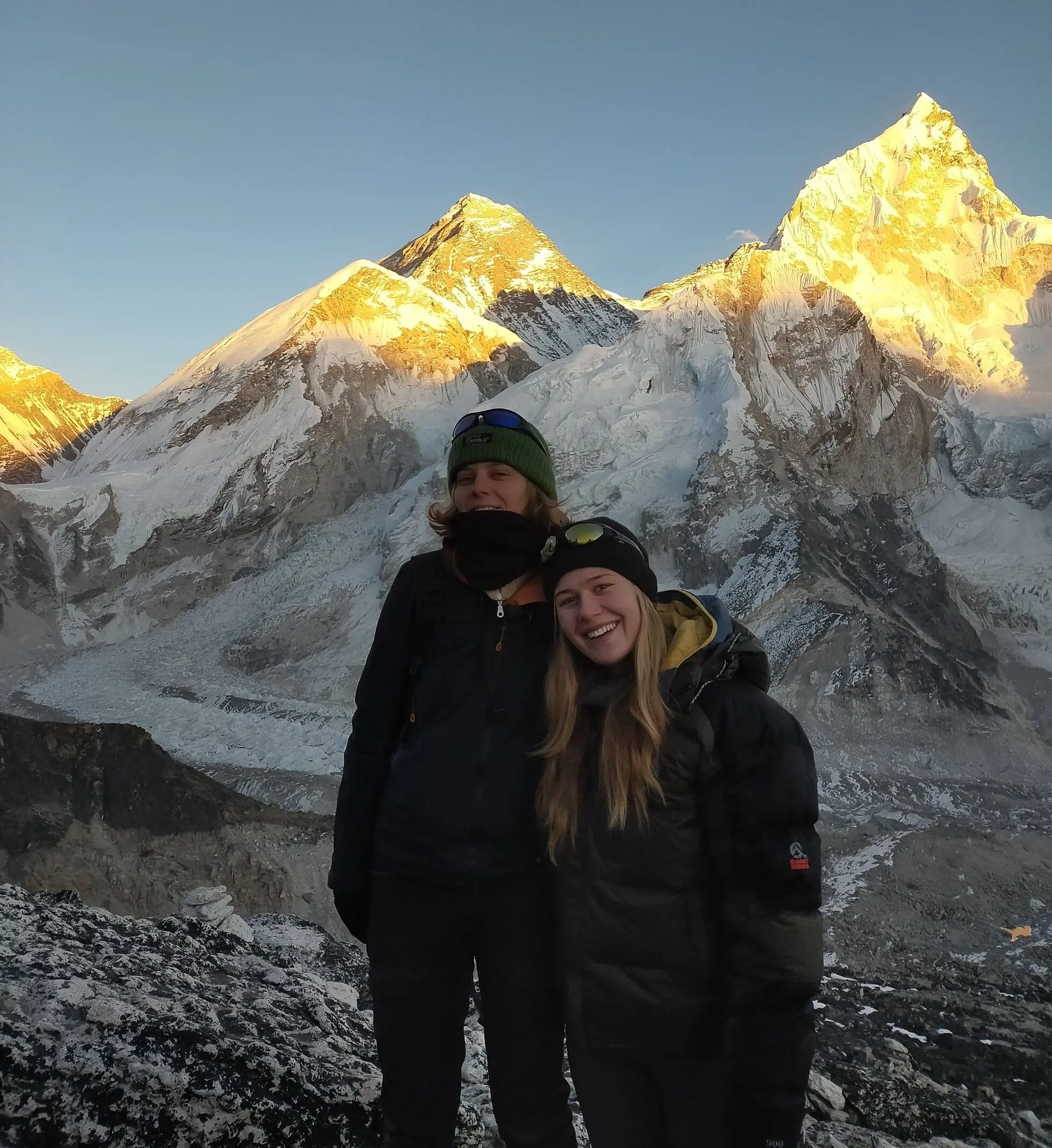
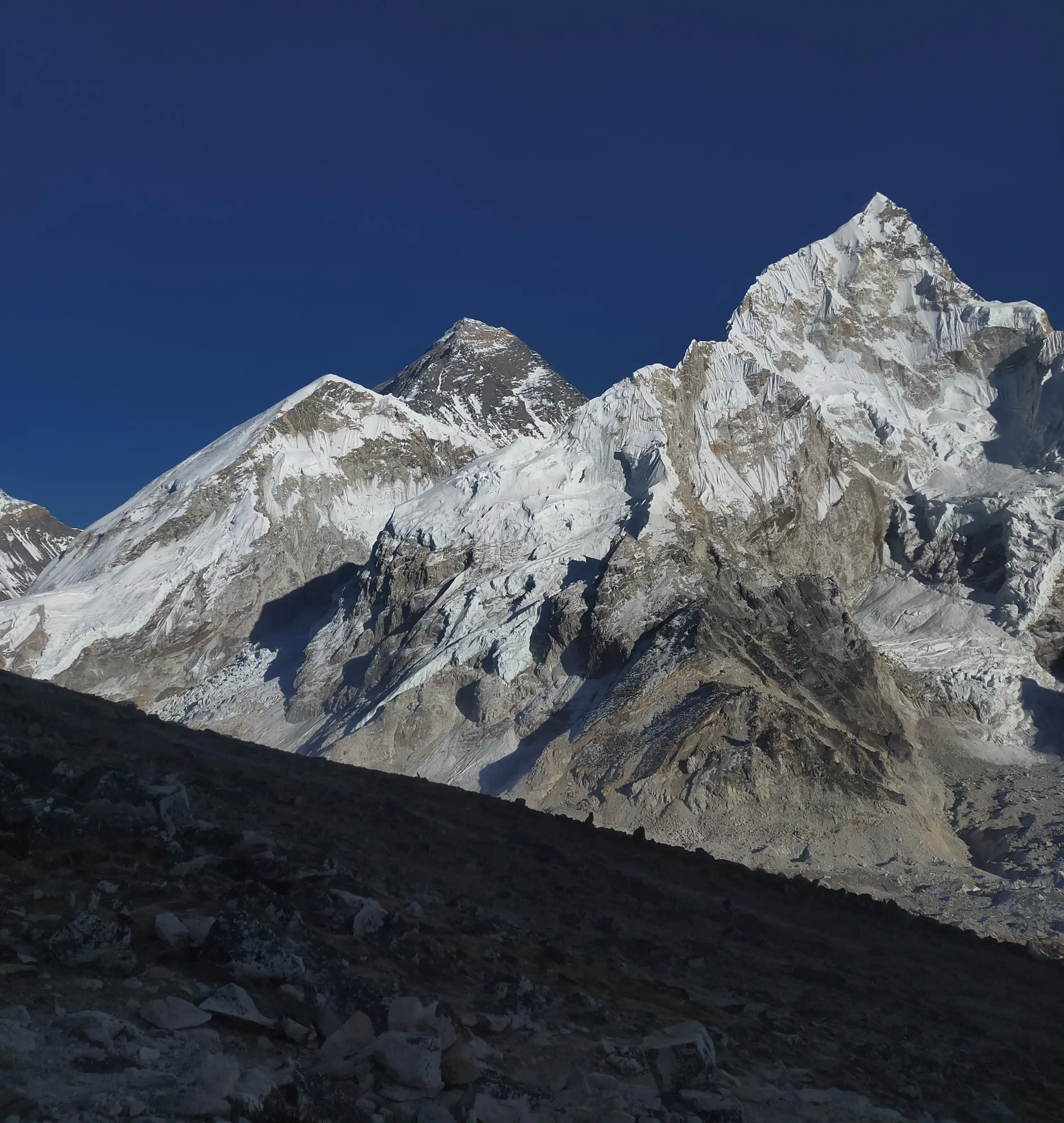
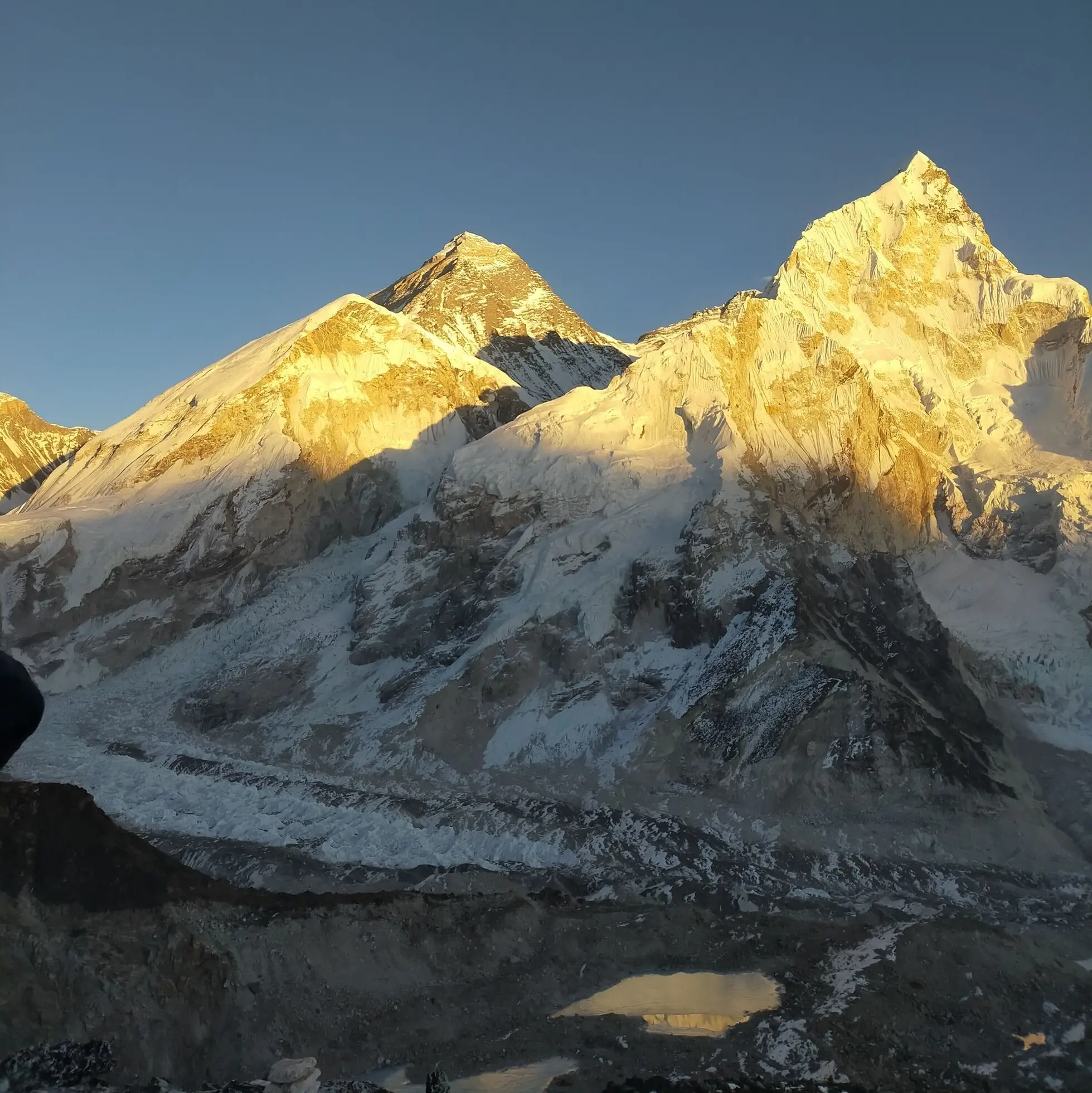
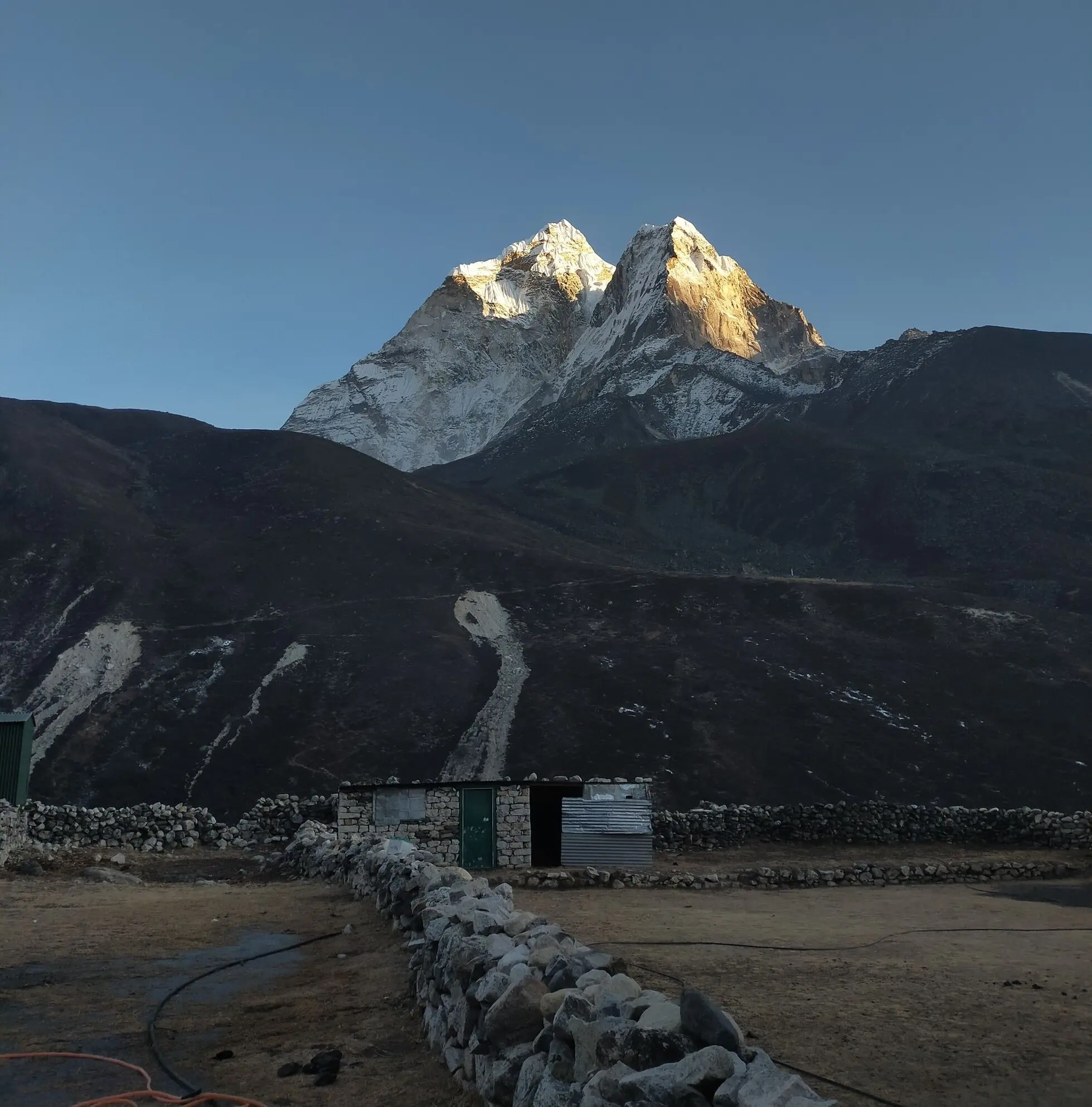
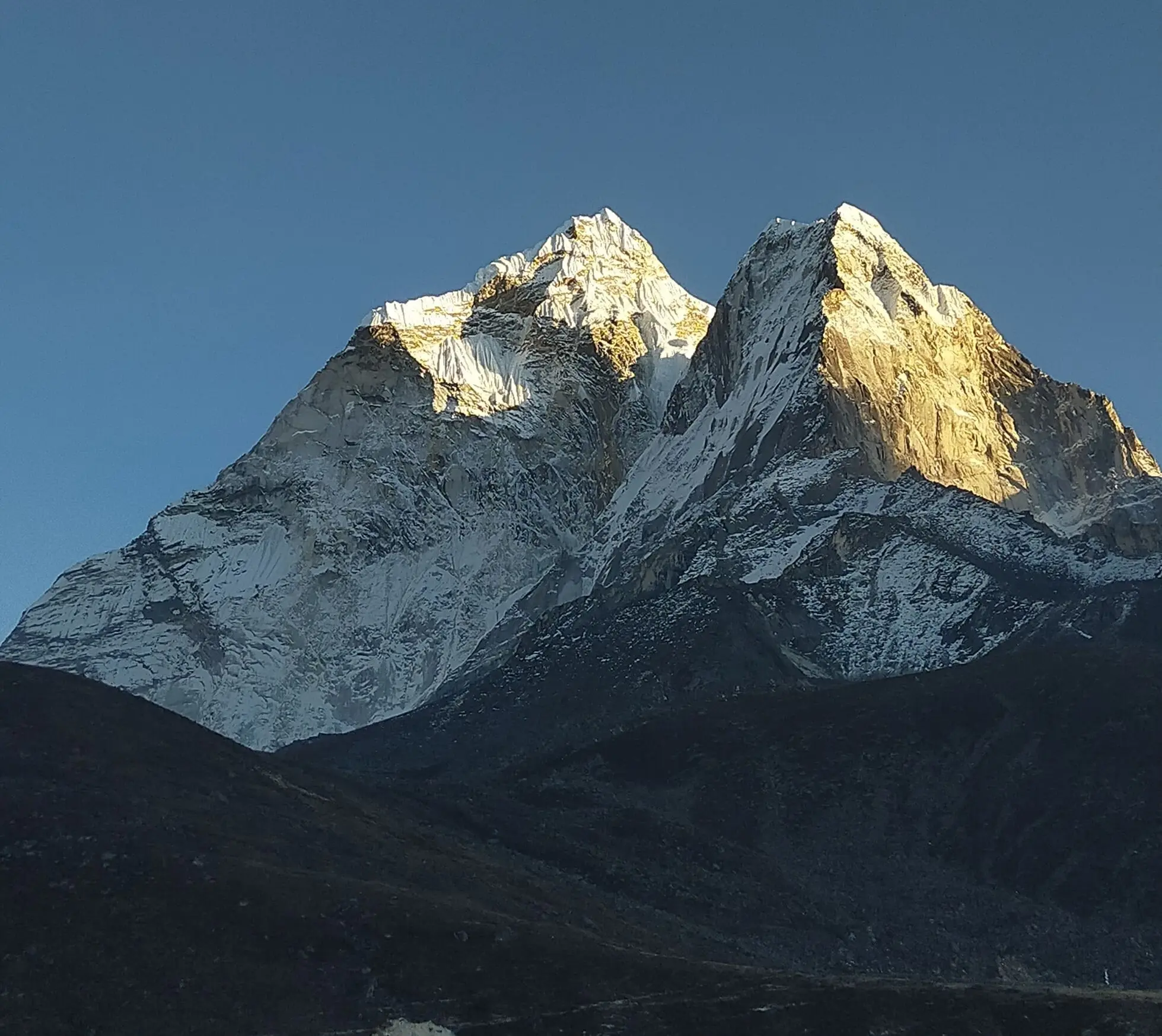
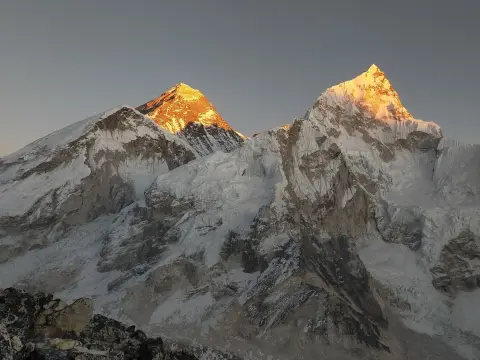
This trek is not just about reaching EBC; it’s about the journey. Each day presents unique experiences: interacting with the warm and welcoming Sherpa community, seeing ancient monasteries, and witnessing the majestic peaks of Ama Dablam, Lhotse, and Nuptse. Kala Patthar provides one of the most famous viewpoints for an up-close view of Everest, especially at sunrise. This trek is suitable for adventurers with a moderate fitness level and a sense of adventure.
Mountain King Adventures ensures a seamless trekking experience, providing knowledgeable guides, porters, and logistical support to make your Everest journey both safe and memorable.
The Everest Base Camp Trek can technically be undertaken year-round, but the best seasons for trekking are pre-monsoon (March to May) and post-monsoon (late September to November). During these periods, the weather is relatively stable, with clear skies and breathtaking mountain visibility, making it perfect for photography and trekking. The spring season also brings vibrant rhododendron blooms, adding striking colors to the trails, while the autumn season offers calm weather and festive vibes in Sherpa villages.
Winter treks (December to February) are possible but challenging due to extremely low temperatures and the likelihood of snow blocking parts of the trail. Monsoon season (June to August) is generally not recommended because heavy rains can cause slippery trails, landslides, and limited mountain visibility. The best seasons also coincide with major Nepali festivals like Tihar and Dashain, allowing trekkers to witness traditional cultural celebrations.
Points to Consider:
Choosing the right season ensures a safe, enjoyable trek, and Mountain King Adventures provides expert guidance on timing and preparation to maximize your experience.
The Everest Base Camp Trek is considered moderate to strenuous, depending on individual fitness and trekking experience. The trail involves long walking hours, steep ascents and descents, and high-altitude conditions that require proper acclimatization. While no technical climbing skills are needed, trekkers must have endurance, stamina, and the ability to adapt to thin air at elevations exceeding 5,000 meters. Acclimatization days in Namche Bazaar and Dingboche are essential to prevent altitude sickness.
Transportation to and from the trekking region starts with a domestic flight from Kathmandu to Lukla, known for its short but scenic runway. The return journey also involves flying back from Lukla to Kathmandu, which offers spectacular aerial views of the Himalayas. Trekkers walk the majority of the route, covering 10–12 km per day on average, depending on altitude gain and trail conditions.
Key Considerations:
Mountain King Adventures provides experienced guides, porters, and detailed acclimatization plans to ensure safety and comfort throughout the trek.
During the Everest Base Camp Trek, food and accommodation are mostly available in tea houses (lodges) along the route. These tea houses offer basic yet comfortable lodging with shared or private rooms, simple bedding, and common dining areas. Facilities improve in larger villages like Namche Bazaar, while smaller villages provide basic amenities. Hot showers may be available for a small fee, and electricity is often limited to charging stations.
Food along the trek includes a mix of Nepali, Tibetan, and Western dishes, catering to different tastes. Popular options include dal bhat (rice and lentil soup), noodles, momo (dumplings), soups, and pasta. Trekkers should stay hydrated and avoid consuming uncooked food from unreliable sources. Carrying snacks like energy bars, chocolate, or dried fruits is highly recommended for energy during long trekking days.
Tips for Food and Accommodation:
Mountain King Adventures ensures trekkers have pre-arranged quality accommodations and meal planning, minimizing any trekking-related stress.
To trek to Everest Base Camp, foreign trekkers need two main permits: the Sagarmatha National Park Permit and the Khumbu Pasang Lhamu Rural Municipality Permit (sometimes called the TIMS card – Trekkers’ Information Management System). These permits are essential for legal trekking in the Everest region and help fund conservation efforts.
Permit acquisition is straightforward, but it is recommended to process them through a trekking company like Mountain King Adventures to avoid delays or errors. Carrying copies of your permits and passport at all times is essential.
Permit Points:
With these permits, trekkers can enjoy the Everest region responsibly and safely.
Choosing Mountain King Adventures for your Everest Base Camp Trek ensures a safe, organized, and unforgettable experience. The company provides professional guides with deep knowledge of the Himalayas, experienced porters, and logistical support from the moment you land in Kathmandu. They offer tailored itineraries to match fitness levels and preferences while prioritizing acclimatization and safety.
Mountain King Adventures focuses on creating a holistic trekking experience, combining adventure, cultural immersion, and environmental responsibility. Trekkers benefit from pre-arranged accommodations, meals, flights, and permits, reducing stress and allowing full enjoyment of the Himalayan journey. The guides also provide emergency support, health monitoring at high altitudes, and assistance with photography, cultural interactions, and local insights.
Reasons to Choose Mountain King Adventures:
With Mountain King Adventures, your trek to Everest Base Camp is not just a journey to the world’s highest peak—it’s a lifetime memory filled with adventure, natural beauty, and cultural encounters.
Upon arrival at Tribhuvan International Airport in Kathmandu, you will be warmly welcomed by a representative from Mountain King Adventures and transferred to your hotel in the heart of the city. After settling in, take some time to rest and recover from your flight. In the evening, you can explore the bustling streets near Thamel, the tourist hub of Kathmandu, enjoy local cuisine, and prepare mentally for the exciting journey ahead. A briefing session about the trek will also be conducted to ensure you are fully prepared.


Today is dedicated to exploring the rich cultural heritage of Kathmandu and preparing for your trek. Visit the iconic Swayambhunath Stupa, also known as the Monkey Temple, and marvel at panoramic views of the Kathmandu Valley. Continue to Boudhanath Stupa, one of the largest Buddhist stupas in the world, and soak in the spiritual atmosphere. After lunch, explore Kathmandu Durbar Square and its historic palaces and temples. In the late afternoon, meet your trekking team, check your gear, and attend a detailed trek briefing to finalize logistics with Mountain King Adventures.
Early in the morning, take a scenic flight from Kathmandu to Lukla, known for its thrilling runway and stunning Himalayan vistas. Upon arrival, you will meet your Sherpa guides and begin your trek towards Phakding. The trail follows the Dudh Koshi River, passing through charming villages, pine forests, and traditional teahouses. Enjoy your first glimpse of the high mountains as you settle into Phakding for the night. Your guides will provide tips on walking at high altitude, and you’ll have a chance to mingle with fellow trekkers while enjoying a hearty dinner.
Today’s trek is more challenging as you ascend towards Namche Bazaar, the bustling Sherpa capital of the Khumbu region. The trail climbs through rhododendron and pine forests, crossing suspension bridges and offering breathtaking views of the surrounding peaks. You might spot yaks carrying supplies and witness the vibrant Sherpa lifestyle. Upon arrival, explore Namche Bazaar’s colorful markets, cafés, and local shops. Namche is also an important acclimatization stop, and your Mountain King Adventures guides will advise on proper rest and hydration to prepare for higher altitudes.
Acclimatization is crucial for a safe trek to Everest Base Camp, and today you will hike to higher elevations near Namche Bazaar. A common route is a trek to the Everest View Hotel or the nearby viewpoints, offering spectacular views of Ama Dablam, Everest, and other towering peaks. After returning to Namche, visit the Sherpa Museum or interact with locals to learn about their culture and traditions. Enjoy a relaxed evening, focusing on rest, hydration, and nutritious meals, allowing your body to adapt fully to the increasing altitude.
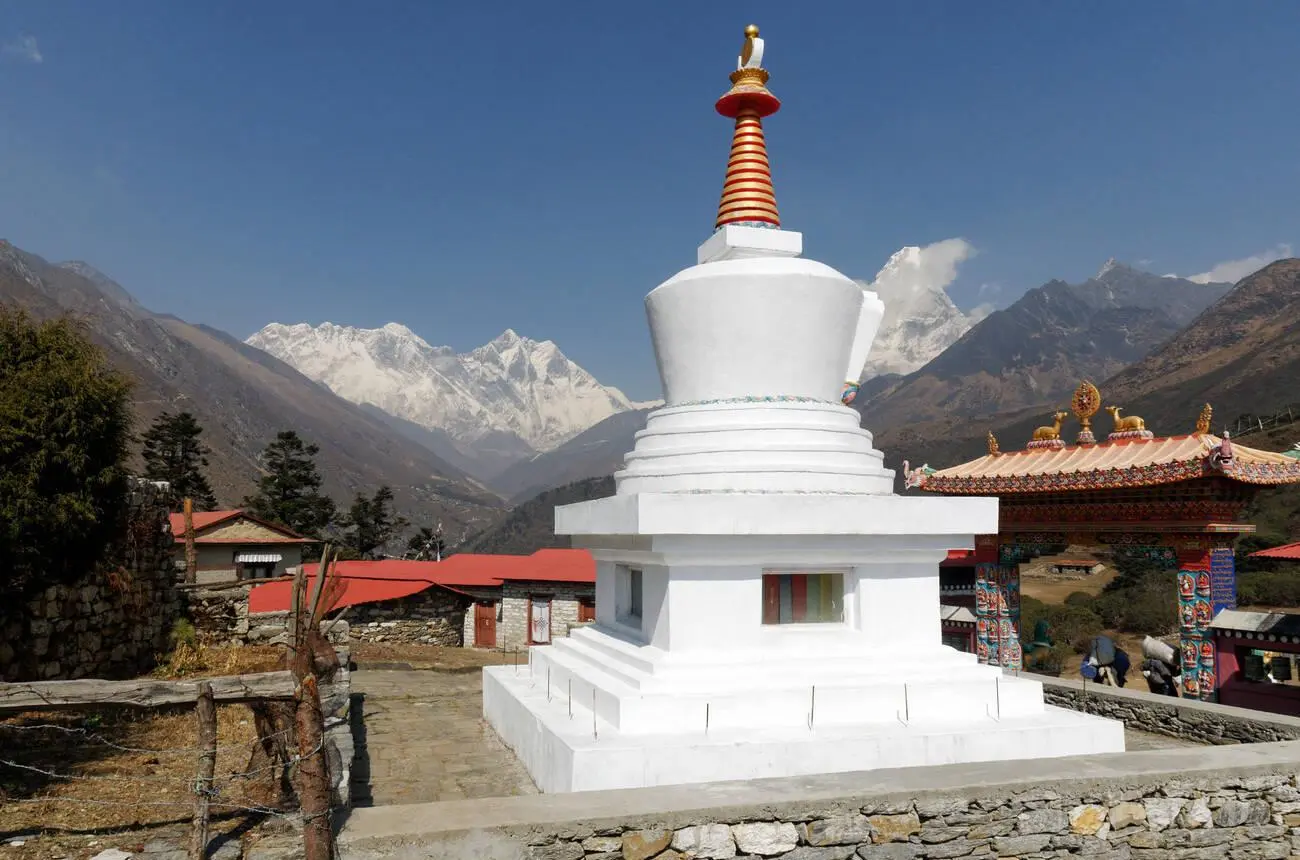
Leaving Namche, the trek today continues through forests of pine and rhododendron, gradually climbing towards Tengboche. You will pass small villages and chortens along the trail while enjoying spectacular views of Ama Dablam. Tengboche is famous for its monastery, one of the largest in the region, and offers a serene atmosphere against a backdrop of towering peaks. Spend some time exploring the monastery, learning about Buddhist practices, and capturing stunning photographs of the surrounding mountains. Overnight stay is in local lodges, providing traditional Sherpa hospitality.
The trail today gradually ascends through the Imja Valley towards Dingboche, offering increasingly dramatic views of Lhotse, Nuptse, and Island Peak. The landscape becomes more alpine with sparse vegetation and rugged terrain. You will pass through small hamlets and cross glacial rivers via suspension bridges. Dingboche is a picturesque village known for its stone houses and welcoming lodges. Upon arrival, relax and enjoy the views of snow-capped peaks. The Mountain King Adventures team will ensure you are well-acclimatized, emphasizing rest and proper nutrition to prepare for higher altitude trekking.
Another crucial acclimatization day, today involves a short hike to higher ground above Dingboche. Many trekkers climb Nangkartshang Peak or nearby ridges to help the body adapt to the thin air. This “climb high, sleep low” approach is essential to prevent altitude sickness. Along the way, enjoy panoramic views of Ama Dablam, Island Peak, and Makalu. Return to Dingboche in the afternoon for rest and meals. Use this day to organize gear, relax, and mentally prepare for the challenging trek ahead, as your Everest Base Camp adventure intensifies.
From Dingboche, the trail takes you past memorials honoring climbers who have perished on Everest. The landscape becomes rocky and barren, signaling the approach to higher altitudes. Trekking alongside glaciers and moraine fields, you will reach Lobuche, a small settlement surrounded by towering peaks. The village serves as a base for climbers and trekkers, offering rustic lodges and breathtaking vistas. Take time to admire the dramatic scenery and enjoy the crisp mountain air. Guides from Mountain King Adventures will provide advice on pacing, hydration, and preparation for the trek to Everest Base Camp.
Today is the highlight of the trek. From Lobuche, continue to Gorak Shep, the last stop before Everest Base Camp. After a short rest, trek the final stretch to the base camp, where you will witness the awe-inspiring Khumbu Icefall and Everest’s massive presence. Spend some time taking photographs and soaking in the sense of achievement before returning to Gorak Shep for overnight stay. The terrain is rugged and challenging, but the Mountain King Adventures guides ensure safety and support throughout the day. Dinner at Gorak Shep is well-earned and celebratory.
Before sunrise, hike up to Kala Patthar, one of the best vantage points for panoramic views of Everest, Lhotse, and Nuptse. Witnessing the first light on the peaks is a truly unforgettable experience. After descending back to Gorak Shep for breakfast, begin the trek downhill towards Pheriche. The journey offers dramatic views of the Khumbu Glacier and surrounding valleys. Upon arrival, enjoy a comfortable stay in a local lodge and rest your body, reflecting on the incredible achievements of reaching such iconic high-altitude landmarks.
Today, retrace your steps down the trail, descending gradually through Lobuche and Tengboche to reach Namche Bazaar. Enjoy the contrast between the rugged high-altitude landscape and the lush lower valleys. Crossing suspension bridges and passing familiar villages, you can reflect on the journey and take in the majestic scenery one last time on this section. Arriving in Namche, explore local markets, relax, and celebrate your trek’s progress with fellow trekkers. Overnight stay is in a cozy lodge, giving you comfort and rest before the continuation of the descent.
The final day of trekking involves a long but rewarding descent to Lukla. Pass through forested trails, cross suspension bridges, and bid farewell to the friendly Sherpa villages you encountered on the way up. The trail is more relaxed compared to the ascent, allowing time to enjoy the natural beauty of the Khumbu region. Reaching Lukla, you can celebrate the completion of the trek with your Mountain King Adventures team, exchange memories, and prepare for the flight back to Kathmandu. Overnight stay in Lukla ensures you are ready for the next day’s journey.
Take a scenic flight back from Lukla to Kathmandu, enjoying breathtaking aerial views of the Himalayas one last time. Upon arrival, transfer to your hotel and spend the rest of the day relaxing or shopping for souvenirs in Thamel. Reflect on the incredible experiences, friendships, and memories created during the trek. In the evening, Mountain King Adventures hosts a farewell dinner, celebrating your successful completion of the Everest Base Camp trek with traditional Nepali dishes and cultural performances.
After breakfast, you will be transferred to Tribhuvan International Airport for your onward journey. Take a moment to appreciate the incredible adventure you’ve experienced with Mountain King Adventures, from the bustling streets of Kathmandu to the breathtaking landscapes of the Khumbu region. Carry home memories of towering peaks, warm Sherpa hospitality, and the unparalleled sense of accomplishment that comes from trekking to one of the most iconic destinations in the world.
Trekking Overview
Mode of Trek: Lodges and guest houses from Lukla to Lukla.
Trekking Grade: Moderate to adventurous, influenced by high altitudes and varied terrain.
Duration: 11 nights and 12 days of trekking (Lukla to Lukla).
Total Trip Duration: 14 nights / 15 days, including arrival in and departure from Kathmandu.
Location
Explore the magnificent Khumbu-Everest region in Far North Mid-East Nepal, home to stunning Himalayan landscapes and vibrant Sherpa culture.
Key Elevations & Viewpoints
Kalapathar Hill: 5,643 m (18,514 ft) – a breathtaking viewpoint offering panoramic views of Everest, Lhotse, Nuptse, and Ama Dablam.
Everest Base Camp (EBC): 5,364 m (17,598 ft) – the ultimate trekking destination where trekkers witness the base of the world’s tallest mountain.
Other Scenic Views: Glaciers, suspension bridges, Himalayan valleys, and rhododendron forests along the route.
Cultural Insights
The region is predominantly inhabited by Sherpa tribes, known for their warm hospitality and rich Tibetan Buddhist heritage.
Visit Tengboche Monastery and local villages to experience traditional rituals, prayer flags, and Sherpa lifestyle.
Optimal Seasons
Accessibility: Trekking is possible year-round, except during the monsoon season (mid-June to mid-September).
Best Seasons:
Spring: March to May – rhododendron blooms and mild weather.
Autumn/Fall: September to November – clear skies and ideal mountain views.
Winter Trekking: Feasible during Christmas and New Year holidays, but expect very cold temperatures and shorter daylight hours.
Essential Tips
Acclimatization: Prioritize acclimatization to prevent altitude sickness; consider extra days if needed.
Packing Essentials: Layered clothing for temperature variations and cold nights.
Cultural Respect: Immerse yourself in Sherpa traditions and approach local customs with curiosity and respect.
Hydration: Stay hydrated to help your body adjust to higher altitudes.
Trekking Permits:
Sagarmatha National Park Permit – required for entry.
TIMS Card (Trekkers’ Information Management System) – mandatory for all trekkers.
Key Viewplaces & Area Highlights
Namche Bazaar: Bustling Sherpa town with shops and local culture.
Tengboche Monastery: Spiritual center with panoramic mountain views.
Dingboche & Lobuche Villages: Scenic stops with traditional lodges.
Glacial Views: Khumbu Glacier and surrounding high peaks.
Suspension Bridges: Iconic trekking features crossing rivers and valleys.
With careful preparation, respect for local culture, and attention to altitude acclimatization, this trek promises an unforgettable Himalayan adventure filled with awe-inspiring views, Sherpa hospitality, and the thrill of standing at the foot of Mount Everest.
Trekking to Everest Base Camp with Mountain King Adventures was an unforgettable experience. The guides were incredibly knowledgeable, supportive, and made sure every detail was taken care of. The scenery was breathtaking, and the trek was challenging but doable. Highly recommended for anyone seeking adventure and awe-inspiring views!
Clothing
Handwear
Footwear
Gear
Miscellaneous
Yes, beginners can undertake the Everest Base Camp Trek with proper preparation. Mountain King Adventures caters to trekkers of varying experience levels by offering gradual ascent profiles, rest days for acclimatization, and support from experienced guides. Motivation, basic fitness, and willingness to follow safety protocols are sufficient to complete the trek successfully. With the right guidance, even first-time trekkers can enjoy the adventure and witness the breathtaking Himalayas.
The trek is considered moderate to strenuous due to high altitude, long walking days, and rugged terrain. Mountain King Adventures ensures that each trekker receives proper acclimatization days in Namche Bazaar and Dingboche to reduce the risk of altitude sickness. Good physical fitness, stamina, and a willingness to walk 5–7 hours a day at varying altitudes are recommended for a safe and enjoyable experience.
Yes, altitude sickness is a possibility due to rapid elevation gain. Mountain King Adventures prioritizes acclimatization days in Namche Bazaar and Dingboche to help trekkers adjust gradually. Symptoms may include headaches, nausea, and shortness of breath. Staying hydrated, walking slowly, and not ascending too quickly are essential precautions. Guides monitor trekkers closely and can recommend rest or medical assistance if needed.
The ideal seasons to trek to Everest Base Camp with Mountain King Adventures are pre-monsoon (March to May) and post-monsoon (late September to November). During these periods, the weather is generally clear, providing spectacular views of Everest and surrounding peaks. Temperatures are moderate, and trails are less slippery compared to the monsoon season. Winter treks are possible but can be extremely cold, while summer brings heavy rains and possible landslides.
Mountain King Adventures arranges comfortable teahouses and lodges along the trail. In major stops like Namche Bazaar, Tengboche, and Dingboche, lodges offer basic but clean rooms with warm bedding and attached or shared bathrooms. Facilities may be more rustic in remote areas, but teahouses typically provide hot showers and meals, ensuring trekkers have a comfortable stay despite the remote environment.
Teahouses along the Everest Base Camp route offer a variety of meals, including traditional Nepali dishes like dal bhat, momos, and noodles, as well as continental options such as pasta, soups, and pancakes. Mountain King Adventures ensures that trekkers have access to nutritious meals to maintain energy levels throughout the trek. Food may be slightly more expensive at higher altitudes due to transportation costs.
While it is possible to trek independently, Mountain King Adventures strongly recommends hiring a licensed guide and, optionally, a porter. Guides provide local expertise, ensure safety, and help with navigation, while porters can carry heavy luggage, making the trek less physically demanding. This allows trekkers to focus on acclimatization and enjoy the stunning scenery rather than worrying about logistics.
The trek is generally safe when proper precautions are taken. Mountain King Adventures emphasizes safety through experienced guides, pre-trek briefings, and careful route planning. Weather, altitude, and trail conditions are constantly monitored, and contingency plans are in place for emergencies. While trekking involves physical challenges, adherence to guidance, proper acclimatization, and cautious hiking minimize risks significantly.
Preparation is key to enjoying the Everest Base Camp Trek. Mountain King Adventures advises starting at least 2–3 months before the trek with cardiovascular exercises, hiking with a weighted backpack, and leg-strengthening workouts. Regular aerobic activities like running, cycling, or swimming improve endurance, while stair climbing or hill walking helps adapt to trekking conditions. Being physically fit enhances your experience and reduces the risk of altitude-related complications.
Trekkers should bring layered clothing suitable for cold temperatures, including thermal innerwear, fleece jackets, down jackets, gloves, hats, and waterproof gear. Quality trekking boots with good ankle support are essential. Mountain King Adventures provides a detailed gear list to ensure trekkers are well-prepared for temperature fluctuations, snowy paths, and long walking hours. Accessories like trekking poles, sunglasses, and sunscreen are also highly recommended.
| No of people | Price per person |
|---|---|
| 1 - 1 | $1,715 |
| 2 - 4 | $1,565 |
| 5 - 9 | $1,550 |
| 10 - 15 | $1,535 |